Art for Healing vs Art Therapy: What’s the Difference?
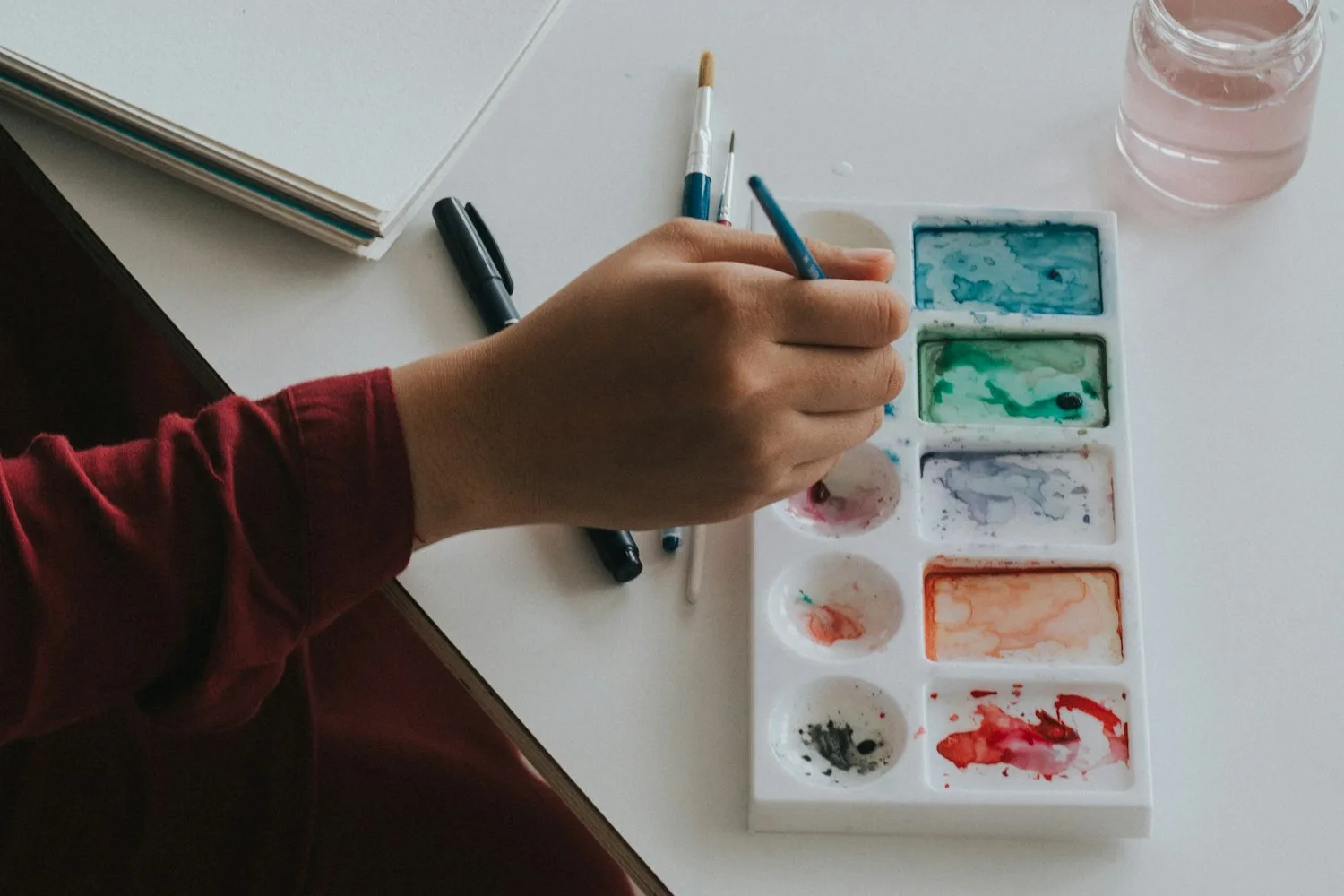
These two get used interchangeably, and they shouldn’t be. One is a licensed clinical profession. The other is a contemplative practice. Confusing them does a disservice to both — and, more importantly, to the person trying to work out which one they need.
The short answer
Art therapy is a form of psychotherapy, practised by a licensed art therapist with clinical training. It involves assessment, therapeutic goals, and a practitioner qualified to interpret what emerges and to work with it clinically. It is regulated, and the title is protected in many places.
Art for healing, as offered here, is a contemplative practice. It uses creative expression — drawing, painting, collage — as a way to access, hold and move through emotion without needing words. There is no diagnosis, no treatment plan, and no interpretation of your work.
Same materials. Genuinely different things.
The differences that actually matter
Who is holding the room. An art therapist is a licensed clinician. Georgina’s role is to hold space and witness — not to interpret or diagnose what surfaces on your page.
What happens to what you make. In art therapy, the work may be part of clinical assessment. In art for healing, nobody analyses it. Often nobody but you ever sees it.
Where it’s going. Therapy has therapeutic goals and a direction. Art for healing is unhurried and process-focused, not outcome-focused. There’s no “right” way to make something and nowhere in particular you’re meant to arrive.
What it can treat. Art therapy is clinical care. Art for healing is not a treatment, not a diagnosis, and not a substitute for mental health care. That’s not modesty — it’s the actual scope.
What an art for healing session involves
Sessions are unhurried. There’s no art skill required and no correct output.
The art-making becomes a doorway into stillness, memory or feeling. You make marks; attention rests on the hand moving and the choices unfolding on the page; something surfaces, or doesn’t, and either is fine. Georgina’s part is to be present with whatever comes, without reaching for what it means.
If you’ve ever found yourself unable to say something out loud but able to put it down in colour, you already understand the mechanism. It reaches the heart when language runs out.
How to tell which one you need
Art therapy is likely the right fit if you’re seeking treatment for a diagnosed condition, you’re working through acute trauma, you want clinical assessment, or you’re in crisis. In those cases you want a licensed art therapist, and this isn’t a close substitute.
Art for healing may be the right fit if you want to be witnessed rather than treated, you’re carrying something that words haven’t reached, you find seated meditation difficult and want a way in through the body, or you’re already in therapy and want a non-clinical practice alongside it.
If you’re in crisis, or you need diagnosis or treatment for a mental health condition, this isn’t the right fit — and Georgina will tell you so directly rather than take the booking.
Can you do both?
Yes, and many people do.
Art for healing sits well alongside therapy and isn’t a replacement for it. If you’re working with a mental health provider, tell them you’re adding this — not for permission, but because a practice that surfaces material is useful information for someone helping you hold it.
And art meditation — is that a third thing?
Closely related, with a different emphasis.
Art meditation uses simple, repetitive creative motion as an anchor for presence — the way breath or sound anchors a seated meditation. The aim is to stay here, now.
Art for healing uses creative expression to access and move through emotion. The aim is to let something be reached that words couldn’t.
In practice they blur, and a single session often moves between them. The distinction is about what you came for, not about different materials.
The word “healing”
It’s doing specific work here, and it isn’t a medical claim.
The premise underneath all of this work is that healing looks less like construction and more like excavation — not building a better version of yourself, but clearing away what’s settled over the one already there. That’s the sense in which it’s meant.
Where to start
If you’re fairly sure you need clinical care, seek a licensed art therapist. That’s the honest recommendation, and it’s a real profession worth going to properly.
If what you’re looking for is space rather than treatment, you can begin alone and for nothing: open a notebook and make some marks, or sit with one of the three free guided meditations here.
And if you’d like to talk through which of these fits, get in touch. Being pointed elsewhere is a perfectly good outcome of that conversation.
Not sure which door is yours today?
Explore the three paths — Healing, Being, and Searching — and find the one that meets you where you are.