Spiritual Discernment: How to Sit With a Decision You Can’t Force
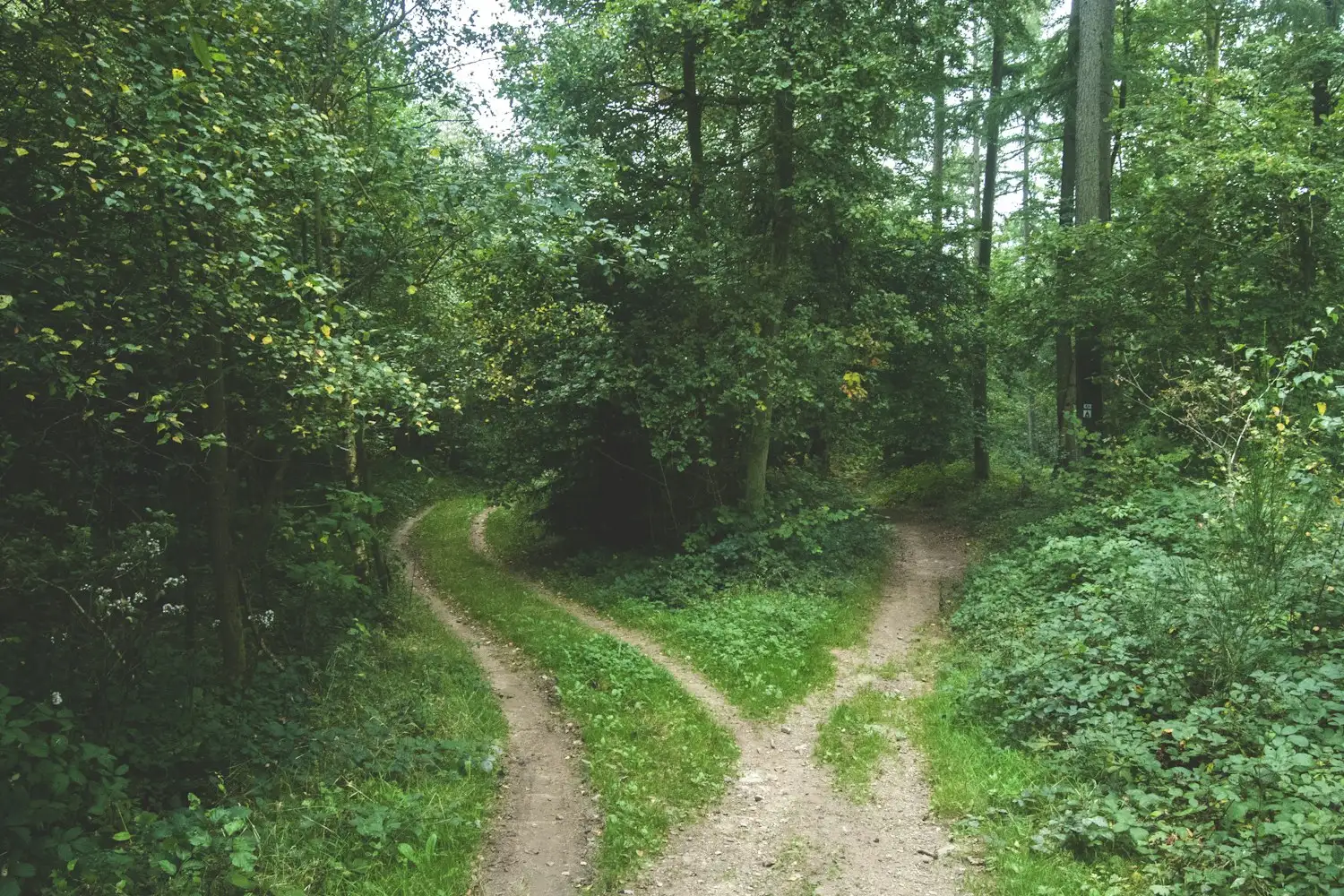
Some decisions yield to a list of pros and cons. Others don’t, and you can usually tell which is which by how the list makes you feel: clearer, or emptier.
Discernment is the practice of sitting with the second kind.
What spiritual discernment is
It’s a way of approaching a question you can’t reason your way out of — not by gathering more information, but by paying attention to what’s already moving in you.
In the Christian contemplative tradition this is called spiritual discernment: listening for how the Sacred is moving within an ordinary decision. You don’t need to share that language to use the practice below, but that is the ground it grew from.
The premise is unfashionable: that beneath the noise of preference and fear, something in you already leans. Discernment is the slow work of getting quiet enough to notice which way.
It’s the practice that lives behind the Searching door — for people facing a question about what’s next, who want space to discern rather than advice.
How it differs from deciding
Deciding is something you do. Discernment is closer to something you allow.
Most decision-making tries to shrink a question until it fits a framework. That works well for choosing a mortgage and badly for choosing a life. Discernment does the opposite: it holds the question open longer than is comfortable, on the theory that premature clarity is usually just relief wearing clarity’s clothes.
It also differs from intuition, which people often conflate with it. Intuition is fast and arrives whole. Discernment is slow and arrives in pieces, and part of its work is distinguishing a genuine leaning from a familiar fear.
A practice for sitting with a question
This takes about twenty minutes, and it works better repeated over days than done once thoroughly.
- Name the question in one sentence. Out loud. If it takes a paragraph, you have more than one question — separate them first.
- Settle. Let your breathing slow. Don’t start thinking about the question yet.
- Hold one option as if it were already decided. Not arguing for it. Living in it for a few minutes. Let it be true.
- Notice the body before the mind. Does something loosen, or brace? Where? The body tends to answer earlier and more honestly than the reasoning.
- Set it down. Do the same with the other option. Give it equal time, even if you think you already know.
- Don’t conclude. Write down what you noticed, without deciding what it means. Close the notebook.
Then leave it. Return in a few days and do it again. What you’re listening for is a pattern that survives repetition, not a feeling that survives one afternoon.
The daily review
A smaller practice that works underneath a big question.
At the end of the day, look back over the hours. Notice where you felt most alive and connected, and where you felt most drained or distant. Sit with both. Don’t score yourself and don’t resolve to do better.
This is a version of what Ignatius of Loyola called the Examen, one of the oldest tools of spiritual discernment.
Done once, it’s mildly interesting. Done across weeks, it becomes a way of seeing patterns you’d otherwise walk straight past — and those patterns are frequently what the larger question was asking about all along.
What gets in the way
- Urgency. Some deadlines are real. Most aren’t, and the felt pressure to resolve is often just the discomfort of not knowing.
- Consulting everyone. Past a certain point, more opinions don’t clarify — they crowd out the quieter signal you were trying to hear.
- Wanting a sign. Discernment rarely delivers certainty. It more often delivers a next step, which is a different and smaller thing.
- Mistaking relief for rightness. The option that ends the discomfort fastest is not automatically the true one.
When it stays unclear
Sometimes nothing resolves, and that is information rather than failure.
An unresolved question often means the real question hasn’t surfaced yet — that what looks like a choice between two jobs is actually a question about being known, or being safe, or being forgiven. Those don’t announce themselves. They arrive sideways, which is why the practices that bypass language matter here: visio divina, art journaling, unhurried time outdoors.
A longer stretch of quiet helps too. Many people find a silent retreat does in two days what six weeks of thinking couldn’t.
A note on what this isn’t
Discernment isn’t therapy, and it isn’t clinical care. It also isn’t advice: the work is to hold space and witness, not to tell you what to do.
If the question you’re carrying is bound up with depression, anxiety or crisis, it deserves proper care alongside — and being told that plainly is more useful than being sold a practice.
Where to start
With one sentence. Write the question down in a single line and leave it somewhere you’ll see it for a week without answering it.
Then, if you’d like company in the sitting rather than a method to apply alone, start with a conversation. You don’t need to have the question well-formed — getting it into one sentence is often the first piece of work, and it’s rarely done alone.
Discernment is one of the shapes contemplative practice takes when something needs deciding.
Not sure which door is yours today?
Explore the three paths — Healing, Being, and Searching — and find the one that meets you where you are.